Miscellaneous
Home NEW Updates About Us Feedback Historic Sites Consultants Contact Us Terms/Conditions
|
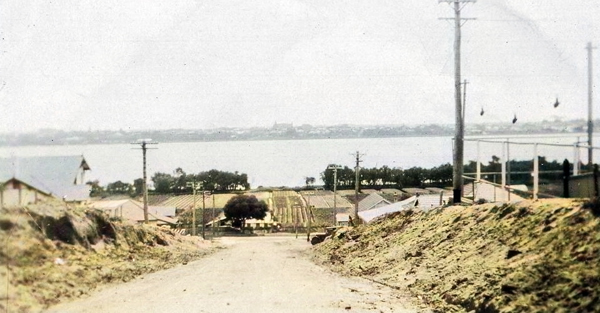
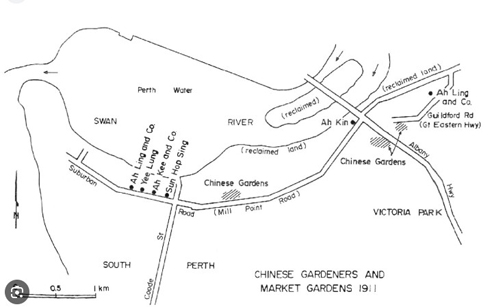
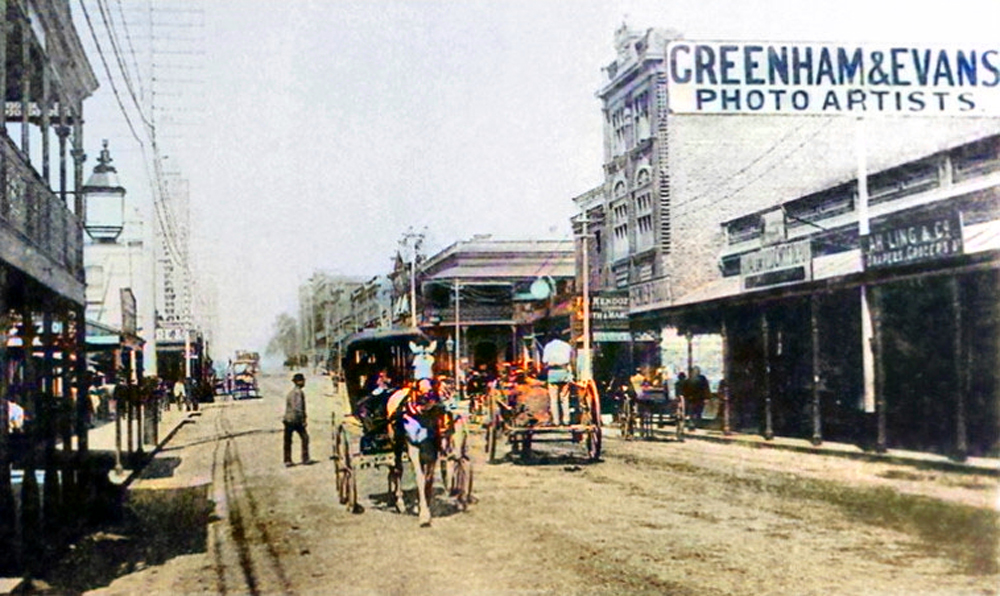
CHINESE MARKET GARDENERS NEW Researched and compiled by Gordon Freegard using material from various resources including UWA Collected, Western Australian Museum and also a large article written by David Mizen November 2025 Chinese market gardeners began to cultivate and improve the marsh land along the north foreshore of South Perth from the early 1880s. By 1888 there were significant Market gardens in the area, supplying most of the fresh vegetables and some fruit consumed in Perth. The bulk of the produce was sold at the James Street Markets and at Chinese owned grocery shops in Perth. Some Chinese shops also operated their own market gardens in South Perth (e.g. Ah Ling & Co.). South Perth vegetables were sold widely and were even taken by cart to supply rural towns as far away as Bunbury. |
ESTABLISHED CHINESE MARKET GARDENS ON THE SOUTH PERTH FORESHORE 1929 #1 |
|
The main area of the early gardens was 11 acres of land owned by Mr. Mends. His former house (Mend's House) also became the residence for many of the early market gardeners. Other land owners also rented sections of the South Perth foreshore to Chinese market gardeners. The age of the average gardener was becoming an issue. Due to the strict administration of the White Australia policy, few new gardeners had arrived since 1901 and so most of those still working were now in their sixties or seventies. |
|
CHINESE MARKET GARDENS ON THE SOUTH PERTH FORESHORE 1911 #2 |
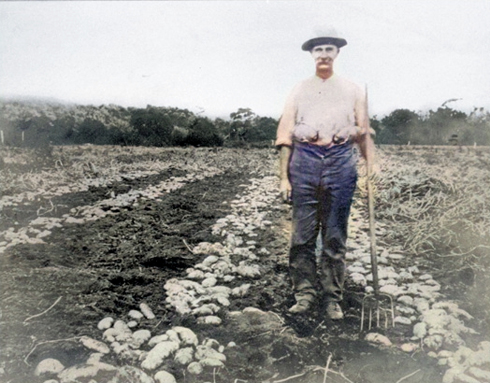
CHINESE GARDENER WORKING HIS POTATO CROP #3 |
|
By the early 1900s market gardening in Perth was done exclusively by Chinese people. Many of the Chinese gardeners were from Guangdong Province which was predominantly a rice, fruit and vegetable growing area. They were familiar with small scale, intensive and communal agricultural labour practices, Chinese wells were dug in the traditional Chinese style: 10 feet by 10 feet square and 4 to 5 feet deep, accommodated by the high water table of the wetlands. I have the honour by direction of the board of Directors to ask.... in respect to the Chinese gardeners in the metropolitan area being taken over by the government .... that some special effort should be made in having this menace to public health removed |
|
Gradually as demand for land for buildings and parks grew, the Chinese swamp gardeners were pushed out of the areas. In the 1920s an influx of southern Europeans established market gardens in outlying areas such as Spearwood and wanneroo. Technological changes such as irrigation systems and fertilisers meant the more marginal land could be used for growing food. From the late 1800’s to the mid 1940’s there were a number of Chinese Market Gardens in the Darling Range. Chinese market gardens and related activities have been recorded in the Darling Range Area from about 1880. This includes “Gooseberry Hill”, Greens Landing (Carmel), Heidelberg, Pickering Brook, Walliston, Lesmurdie and Darlington. These sites are significant for growing the produce that supplied Perth and the industrial projects along the scarp that arose in the late 1880’s and 1890’s. Much of the gardening activity is associated with the Perth business of Ah Ling & Co. In turn Ah Ling and Co is tied to Colonel Haynes and Septimus Burt. Both of those individuals are tied to properties in Gooseberry Hill, Kalamunda, and Pickering Brook. Supreme Court Justice E.A. Stone also had property in Kalamunda and had a part in the larger story relating to Ah Ling & Co. |
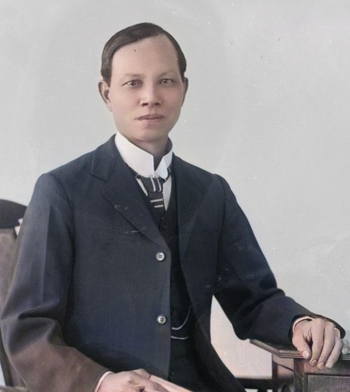
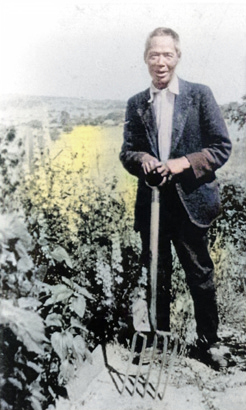
AH LING (Possibly) #4 |
|
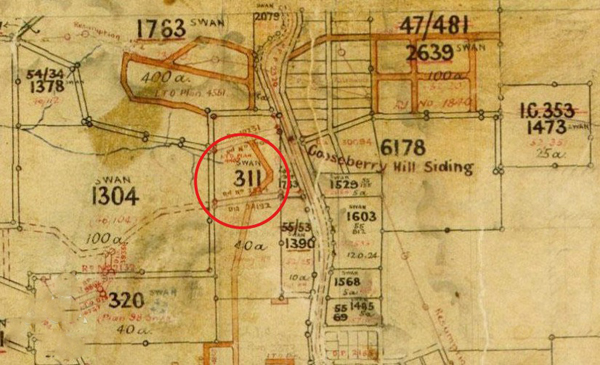
MAP SHOWING LOT 311 GOOSEBERRY HILL #5 |
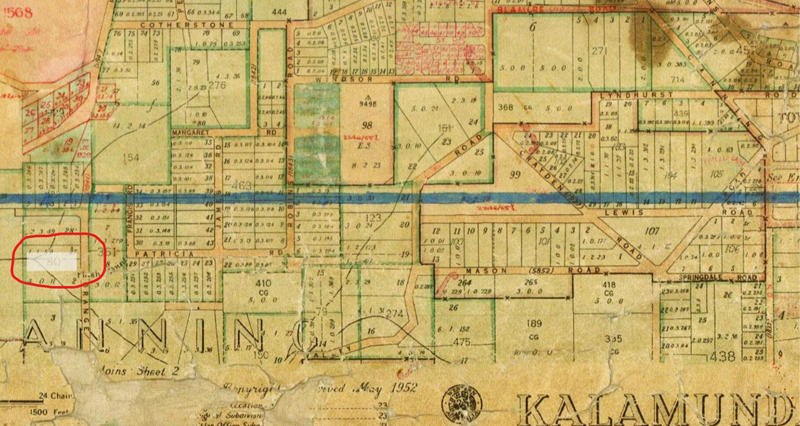
The principal known market garden sites in the Darling Range are Burt and Haynes properties in “Gooseberry Hill”, Location 311 at the top of Gooseberry Hill Road, Locations 80 and 259 on Orange Valley Road Kalamunda (formerly Woodlupine). Levi Green's Location 702 at Greens Landing now Carmel, then Wilson and Johns following Levi Green's death. The Fernihough / Annetts property Location 300 on Canning Road, a property on Halleendale Road, Walliston and Payne's Location in Lesmurdie. Payne’s Location is highly problematic on a number of fronts. There was a residence on Pomeroy Road for the itinerant workers. In addition Ah Ling & Co leased Hillsden in Darlington. |
|
The most prominent garden in Gooseberry Hill was Swan Location 311. It and its partner Location 320 are fundamental to the history of the City of Kalamunda. The Locations were initially surveyed for Ben Robins, in 1860. Robins was a well known shepherd and butcher in Guildford. Robins Died in 1874 and both properties were passed to his son W.B. Robins. W.B. Robins was declared bankrupt in 1876. |
MAP SHOWING LOT 80 GOOSEBERRY HILL #6 |
|
|
|
AH LING & CO BUSINESS AT 117 BARRACK STREET PERTH ON THE RIGHT OF IMAGE #7 |
|
The earliest commentary on “Gooseberry Hill” market gardens refers to Burt and Haynes. Prior to 1903 “Gooseberry Hill” referred to the land south of the Helena River, east of the Great Eastern Highway, beyond Pickering Brook and south beyond Canning Mills. It is reported that Septimus Burt and the then Captain Haynes established “a couple” of orange and deciduous fruit plantations in about 1873. However this predates the sale of Robins’ estate. There is an 1882 reference to Burt and Hayes “in the gorges in the Darling Range” growing oranges. This is consistent with the location of what became known as Woodlupine. In 1884 advertisements referring to Burt and Haynes Oranges appeared. Similar advertisements appeared in 1885 for oranges from the “Gooseberry Hill estate Guildford”. There is a later article which implies the “Gooseberry Hill Estate” is the Burt and Haynes property, Location 311. Jen Ah Chow is noted as working as a gardener in Gooseberry Hill in 1888 and “Woodlupine” as a place name appears in 1889. Ah Chow could have been working at either Location 311 or Woodlupine. In 1890 a prosecution commenced against Gong Kee for selling illegal liquor. Evidence in the trial included that “Ah Sou” and Ah Yow lived together at “Woodlupin”. It is likely that Woodlupin is a misspelling of Woodlupine. There was further evidence that Ah Yow and Gong Kee were partners. The structure of the police complaint and trial evidence suggests that the partnership relates to the Woodlupine market garden at Kalamunda. At this point significant industrial development was now afoot on the Darling Scarp, including the construction of Victoria Reservoir and the Upper Darling Range Railway (UDRR). These developments would have provided a ready market for produce. |
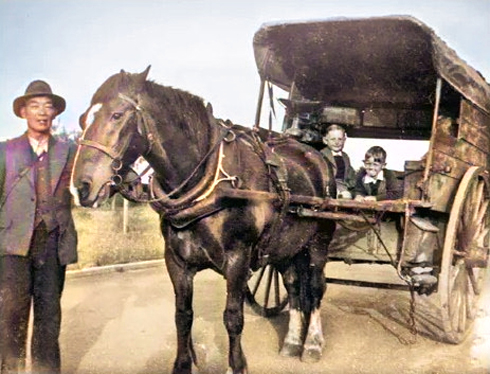
CHINESE MARKET GARDENER #8 |
|
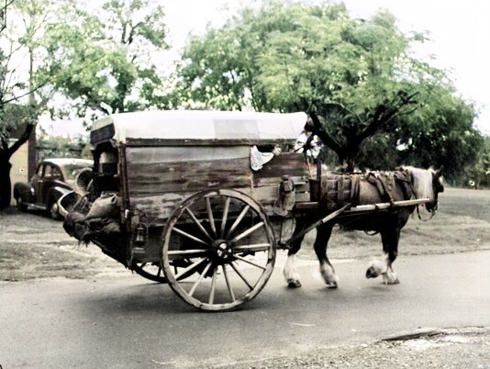
CHINESE MARKET GARDENER'S DELIVERY WAGON #9 |
The UDRR was completed mid 1891 and the Victoria Reservoir late 1891. The railway allowed expansion of the “timber, stone quarries, brickyards, metropolitan water supply, and the gardening industry”, including fruit growing, along its length. The railway had a stopping place at Gooseberry Hill. From this point produce could be transported to Perth or to the Victoria Reservoir construction site or Canning Mills then later Kalamunda, Guppy's Mill, or Pickering Brook. In mid 1891 it was alleged that Ah Song shot at 3 Europeans suspected of stealing oranges at Gooseberry Hill. He was arrested and charged. A slightly different account is set out in the WA Police Gazette. |
|
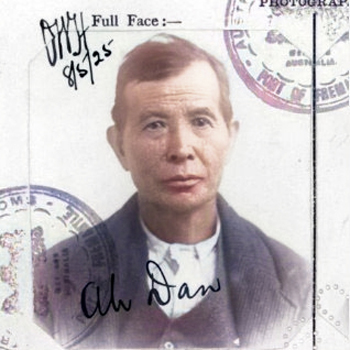
However, the Gazette also records “Nolle prosequi entered by Attorney General”. A Nolle Prosequi is a legal device used by the prosecution when it wants to abort a trial. The Gazette does not tie the shooting events to a particular property. However it is likely to relate to Location 311. The Attorney General at the time was Septimus Burt, co-owner of Location 311. The Post Office Directories from 1898 to 1902 list “Ah Thong” as a market gardener at the Darling Range Quarries. This is probably Thomas Statham's quarry on the Zig Zag (UDRR). However it could be Statham’s clay pit and brick works at Smiths Mill. It is possible this is Ah Thom, one of Ah Ling and Co’s partners. In an 1893 article the writer refers to Burt and Haynes “orangeries” and “gardens” noting that both Burt and Haynes properties had been leased to “the heathen Chinese". Anti Chinese sentiment was starting to build in the print media who were pushing a white Australia agenda. Hi Toi was also noted to have an interest in a property in Gooseberry Hill in 1899. However, no location was given. Hi Toy operated a separate business to Ah Ling in Murray St with interests in Claremont and Midland Junction. In March 1900 Ah Ling & Co sued George Merson and Alfred E. Lankester Department of Agriculture employees. The basis of the action was that Merson and Lankester unlawfully interfered with Ah Ling's garden and destroyed produce, picked fruit and trampled on his potatoes. Ah Ling & Co was successful and was awarded damages for some of the losses. The State Records Office file on this matter definitively ties Ah Ling & Co’s market garden to Location 311 in Gooseberry Hill. In 1902 Kalamunda was gazetted as a distinct locality. The term Gooseberry Hill refers to what is now the suburb at the northern end of the City of Kalamunda. In 1905 there was a prosecution in relation to a “cook shop” being run at 73 King Street Perth. This address appears to be an informal Chinese club, in police terms, a common gaming house. Ah Chow was charged with gambling, in the proceedings a personal reference from Septimus Burt was tendered stating Ah Chow had been working for 2 years at Gooseberry Hill. This appears to be Ah Chow (6). If the evidence at trial is correct it appears that Ah Chow(6) was a long term resident of the Kalamunda and Gooseberry Hill gardens. In the early 1900’s the Police were required to periodically report on the state of agriculture in their district. The 1909 report states: I beg to report having completed the statistical returns for the Guildford police district, which embraces Kalamunda, Heidelberg, Gooseberry Hill, Munday's Swamp, Beechboro, Caversham, West and Middle Swan, War brook, Bullsbrook, Guildford municipality, West and South Guildford, and Redcliffe. … There are eight vegetable gardens in the district, aggregating about 50 acres, all worked and controlled by Chinese. They appear to do very well. It is extremely hard to obtain correct information for statistical purposes from these, as they view with that inherent suspicion so characteristic of the Celestial all questions put to them by the collector. Of the 8 gardens in the district, Kalamunda and Gooseberry Hill refers to Burt and Haynes Woodlupine and Location 311, Heidelberg refers to Levi Greens Location 702. The report infers each garden was about 5 acres. After about 1900 Locations 311 and 320 were being subdivided to create roads. In 1915 there was an application to further subdivide Locations 311, 1390 and 2510. This indicates there was a common owner or owners. Location 1390 is adjacent to Location 311 on the east side, Location 2510 abuts the other two on the south. It seems likely that the market gardens moved eastwards on to Location 1390 to compensate for the reduction in the area on Location 311. There is evidence that suggests Location 1390 was used by Ah Ling in the mid 1910’s up to the end of 1915. December 1915 marks the end of Ah Ling & Co in Gooseberry Hill. In the early afternoon of December 25th a fire started down Lenore Road and burnt up the gully towards the railway. ”... The store of Ah Ling was also demolished, and his beautiful plantain plantation was destroyed, while the rest of his orchard was badly singed”. His cottage was also destroyed, the fire jumped Railway Road and burnt down the Gooseberry Hill railway station platform and shelter shed. There is no reference to any activity on the site until 1919. Both Burt and Haynes were now deceased. Their real estate was amalgamated to form the Garden Estate. This is probably the 1915 subdivision referred to above. The Garden Estate subdivision was listed for sale in November 1919 and included many lots with “citrus and other fruit trees”. By January 1925 the Burt and Haynes properties were described as “retrograded until they would not keep a cow”. Not only had the Burt and Haynes properties been subdivided but Gooseberry Hill itself had been split into two. In early 1902 the suburb of Kalamunda was excised from the greater Gooseberry Hill. In mid 1902 The Geraldton fruit Co was established and had premises at 596 Hay Street Perth. The Geraldton Fruit Co shared Burt and Haynes properties at Locations 80 and 259 (now Orange Valley Road Kalamunda) in 1904 with Ah Ling and Co. The proprietor was Paul Soong Quong. Various reports of small debt disputes indicate the business traded from 1902 to about 1906. There is a significant volume of material on Paul Soong Quong and his relationship to the Wesleyan Church. In 1903 the UDRR was taken over by the government. As a result Kalamunda received a small station building. A hotel was built adjacent and the area started to become a travel destination. Commerce started to expand. In 1905 the commercial expansion allowed Ah Dan to set up as a greengrocer in Kalamunda and marker gardener in Pickering Brook. Unfortunately there is nothing to indicate where in Kalamunda Ah Dan’s greengrocers was located. In the early 1900’s W.T. Mason owned Canning Locations 419 and 189 known as “Springdale”. These are adjacent to Mason Road Kalamunda and east of Orange Valley Road. Half of Mason's holding was sold and leased to Chinese market gardeners; their practices were compared unfavourably to Masons. It was reported that the purchasers of Mason's property were Burt and Haynes and Mason's property was incorporated into “Woodlupine”. The Chinese market gardeners were reported to be operating Woodlupine in 1914. In 1919 Mary Anne Douglas and May Peterson were charged with being idle and disorderly at an Osborne Park property owned by Ah Jim. Douglas had previously lived with a chinaman at Kalamunda but had fallen out with him so agreed to act as house keeper for Ah Jim. Peterson had come from Gooseberry Hill and was house keeper for Ah Chong. Ah Chow and Ah Jim gave evidence in support of Douglas and Peterson. Both Peterson and Douglas were convicted of prostitution. By 1920 Piesse Brook and Woodlupine were being surveyed for subdivision. The context of the report suggests Piesse Brook means Pickering Brook. There is more information in relation to Ah Dan’s Pickering Brook activities. In 1907 Ah Dan appeared as a witness in a rhubarb case. Won Let was charged with stealing rhubarb roots from Newman's nursery. Won Let’s evidence was that he and Ah Dan went to Hunters property at Pickering Brook and purchased a quantity of rhubarb roots. Hunter gave evidence corroborating Won Let’s testimony. In spite of the corroborative evidence, Won Let was convicted and fined. |
|
Ah Dan was evidently familiar with the various gardens and gardeners in Pickering Brook. Gordon Freegard owns the eastern portion of what was Location 260 in Pickering Brook. The Lands Department plan posted on Pickering Brook History web site shows an orchard at this Location. Freegard states he has been advised that a chinese market garden operated on his portion of the Location and there is a historic well on the Forest Road side. The putative site of the Millars Pickering Brook No.1 mill is a few hundred meters from Freegard's position. Location 260 would also be the closest garden to Barton's Mill and would give the gardeners a ready market. In addition to Ah Dan Ah Mang is recorded working in Pickering Brook in 1914 but no location is given. It is possible that Ah Mang was working at Location 260. The gardeners also had interests in properties in Walliston. |
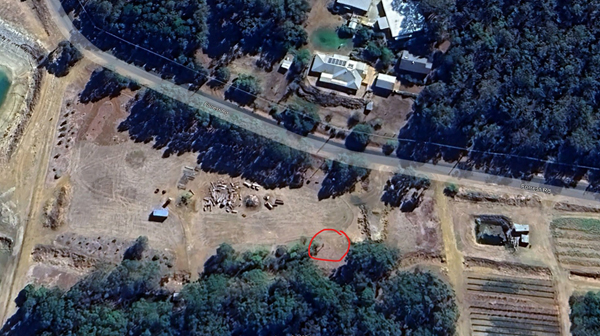
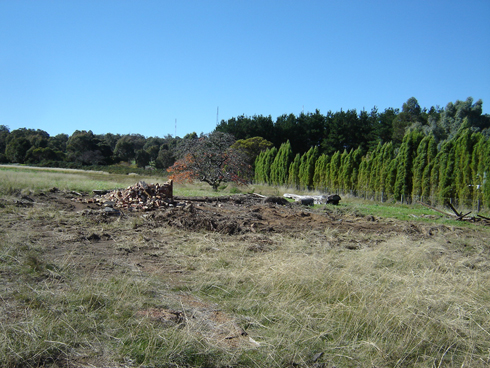
MAP SHOWING POSITION OF WELL ON LOT 260 JUST OFF FORREST ROAD #10 |
|
Atkinson records Ah Dan (1) working in Walliston in the 1890’s. Ah Dan (1) is problematic on a number of fronts. Firstly, Walliston as a locality name did not exist until 1915. Prior to this the locality was referred to as Wallis’s Landing. Secondly, there is no obvious property with connections to market gardens where he might have been working. Thirdly, there is nothing in the material relating to the Wallis family that indicates any market gardeners in the area prior to 1916. There is a further issue, in 1900 Ah Dan was prosecuted for hawking without a license. This appears to have been a Perth Court matter indicating that the offence was in the Perth area. It appears to be very likely that Ah Dan was selling for the east Perth gardeners. The Perth Ah Dan died of bubonic plague at the Perth Public Hospital in 1903. At the time of his death the deceased was working as a market gardener in the Highgate Hill area. Following his death the hospital and those he had been in contact with were placed in quarantine. His body was cremated at the Woodman Point crematorium. It is difficult to know whether Atkinson’s Ah Dan (1) is an entirely mistaken attribution or if it is correct but the source has given the wrong date. The evidence below suggests the latter is more likely. |
|
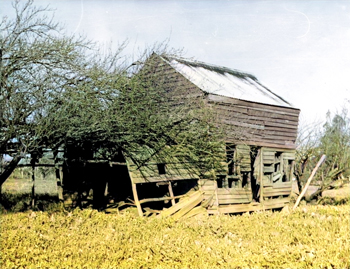
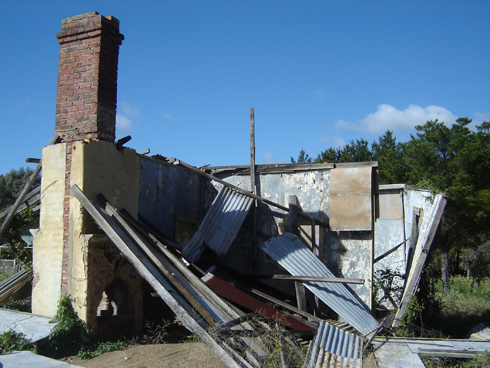
RUINS OF CHINESE MARKET GARDENER'S HUT, WALLISTON #11 |
|
|
RUINS OF CHINESE MARKET GARDENER'S HUT, WALLISTON #12 |
RUINS OF CHINESE MARKET GARDENER'S HUT, WALLISTON #13 |
|
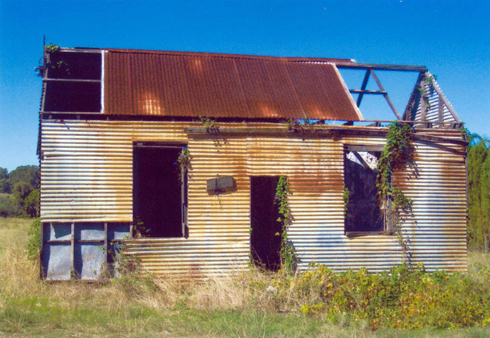
RUINS OF CHINESE MARKET GARDENER'S HUT, WALLISTON #14 |
The Skinner/Payne property needs to be properly identified. Post Office Directory listings for Hing continued until 1925. The authors of Memories of Walliston lists Yam, Chum Mee, Young Sing Lee, Ah Ming and Jim Sing. Of these Chum Mee was listed as gardener in Walliston in 1927. Listings continued until 1932. Young Sing Lee is likely to refer to Young Kim. Young Kim (also known as Ah Young ) was killed in an accident at the East Street railway crossing in Midland in 1930. At the time of his death Young Kim was working as a gardener in Walliston. Ah Ming is likely to refer to Ah Mang, Ah Mang worked in Walliston in 1916 but no specific location is given. Jim Sing is likely to refer to Gin Sing. The Post Office Directory listings for Gin Sing continue to 1922. The UWA Collection contains a listing for Won Gin Shing. The collection notes he was at Wallistion but gives slightly different dates to the directory. It appears likely Jim Sing, Gin Sing and Won Gin Shing are the same person. |
|
The authors of Memories of Walliston refer to Ah Dan and state he was established in the area in 1916. It is highly likely the Wallis’ are referring to Ah Dan (2). The last Post Office Directory entry for Ah Dan appeared in 1924. However he won 2nd prize for his Lisbon Lemons at the Kalamunda Show in January 1925 . Their produce included strawberries, cauliflowers, cabbages, tomatoes, beans and possibly ginger. Ah Dan also known as Ah Ping died in strange circumstances as a result of poisoning in 1933. In April 1941 Chuck Sing’s employee Ki Sooey went missing, he left Sing’s residence at Walliston and walked to the Pickering Brook shop to purchase tobacco, in the process it appears he fell and suffered a head injury. The body was found in October about 4 miles from Pickering Brook, the body had been attacked by wild dogs. Chuck Sing died in 1954 and was buried in the Chinese section of Karakatta Cemetery. |
|
CHINESE TRANSPORTING PRODUCE #15 |
Both Ah Dan and Chuck Sing were well regarded in the local community. Both are memorialised. The road Sing Gardens was named after Chuck Sing. The adjacent road Dan Close appears to be named after Ah Dan. Perhaps a communal vegetable garden would have been a better memorial, however, transport and access to the means of moving produce is a common thread in many of the Darling Range market gardens. |
|
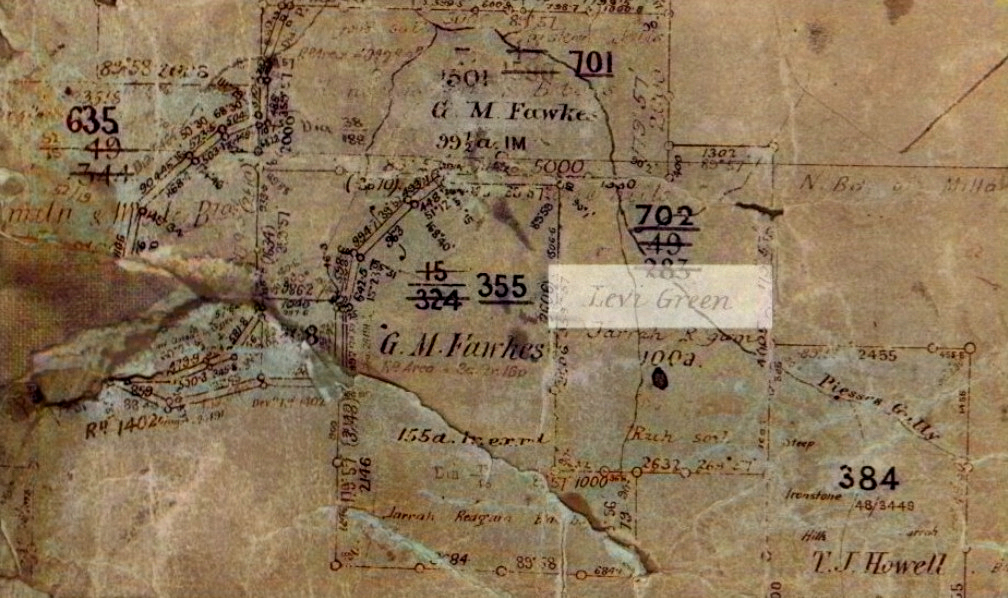
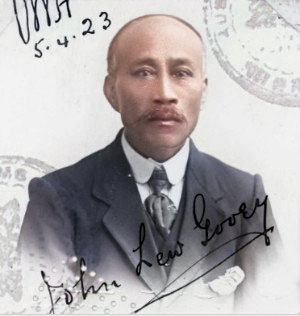
Levi Green leased his Heidelberg property to Chinese market gardeners prior to April 1898. The report does not name the tenants. John Gooey rented land from Levi Green for about 3 years. The produce was carted to the railway siding and shipped to a shop in Perth. Gooey must have leased the property after the creation of the Heidelberg Siding in 1904 (known as Greens Landing) and Green's death in 1914. Ah Dan has a confirmed association with Levi Green from 1910 when a road to Green's property was constructed. In 1912 Ah Dan was prosecuted for failing to control a fruit fly infestation. The article refers to Greens Landing Heidelberg but appears to be referring to Levi Green's nearby property Location 702, Ah Dan was the tenant and employed Chen Hong. Ah Dan was convicted and fined. G.H. Wilson purchased Levi Green's garden in 1914. In 1919 Wilson’s garden was described as being “formerly tended by John Chinaman”. This tends to suggest the Chinese gardeners had left the property shortly prior to 1919. The last known Darling Range market garden was located in Darlington. |
LEVI GREEN'S CARMEL PROPERTY THAT WAS LEASED TO THE CHINESE #16 |
|
AH DAN #17 |
JOHN LEW GOOEY #18 |
|
In November 1901 the deceased estates of Dr A.R. Waylen and the Hon. J.G.H. Amherst were put up for auction. This included the orchard and garden known as Hillsden -Swan Location 1234. The auction advertisement states that Hillsden was subject to lease to Ah Ling and Co expiring May 1st 1904. The dates indicate a 5 year lease, in which case Ah Ling & Co were in place in late April 1899. A prior 5 year lease would also align with Ah Sing's commencement date of 1894. In any event there are individuals likely to be associated with Ah Ling & Co. in Darlington prior to 1899. The earliest recorded Chinese market gardener in Darlington is Ah Sing (23) in 1894-95, next was Sam Woo in 1897. The Post Office Directory lists Ah Ling & Co, Ah Nim and Sun Lee in Darlington in 1904. Sun Lee may be Lee Sum. Ah Nim is known to be a partner of Ah Ling & Co. There are further Post Office Directory listings for Woo Sam Darlington in 1905, 1906 and 1907. The Hillsden Estate is adjacent to the Darlington Railway Station on the Eastern Railway. This would allow produce to be transported to the Perth shop relatively easily. However, produce could also have been shipped up the line to Smiths Mill and Stathams brick works or any of the stations to Kalgoorlie. Bizzaca and Bush state that Ah Ling & Co. set up in Darlington in 1902. This can no longer be seen as correct. Locations 311 and 320 are significant in their own right as foundation lots in Gooseberry Hill; the addition of the association to Ah Ling & Co increases the significance of Location 311. The Chinese market gardeners are significant as they played an important role in providing produce for Perth shops. In the context of the greater Gooseberry Hill it is likely that a significant amount of the produce was supplied to the industrial projects that were constructed in the area in the late 1880s and early 1890s. Operations of the greater Gooseberry Hill gardens were facilitated by the Upper Darling Range Railway from mid 1891. The Darlington operations were assisted by the Eastern Railway. The garden sites are significant as work sites. Tommy Hing's connection to the Skinner/Payne property needs further investigation and the property to be properly identified, not only for its role as a market garden but as the residence of Jack Skinner the subject of the D.H. Lawrence and Mollie Skinner text the Boy in the Bush. All of the Darling Range gardens are either directly adjacent to railway transport or in the likely case of the Skinner/Payne property and the Pickering Brook gardens within a couple of kilometers. However, the Pickering Brook gardens were close to timber mills which would have provided a captive market and would negate the need for shipping produce to Perth.
|
|
Every endeavour has been made to accurately record the details however if you would like to provide additional images and/or newer information we are pleased to update the details on this site. Please use CONTACT at the top of this page to email us. We appreciate your involvement in recording the history of our area.
|
|
Reference: Article: Gordon Freegard Images:: 1, 2 16, 17, 18 UWA Collected
Copyright : Gordon Freegard 2008 - 2025
|